Some damaged trace heating cables can be repaired using an approved joint or splice system, provided the cable type, damage location, environment, design and product approvals allow it. Other damage requires replacement of part or all of the circuit.
A repair should never be improvised with generic connectors or tape. The repaired system must retain suitable electrical insulation, earth or braid continuity, ingress protection, temperature rating, mechanical protection and any hazardous-area certification.
First identify the exact cable
Confirm manufacturer, product family, output or resistance, voltage, temperature rating and approvals. Cables that look similar can have different construction and accessory systems. If identification is missing, drawings, termination kits and previous records may help; otherwise replacement can be more defensible than an unsupported joint.
Assess the type and location of damage
A local cut in an accessible straight run is a different problem from widespread overheating, chemical attack, water ingress or damage inside a hazardous or inaccessible area. Check whether there is sufficient sound cable for the approved joint and whether the finished assembly can be supported and maintained.
Find and correct the cause
Cable damage may result from sharp edges, excessive pull, incorrect attachment, hot work, pipe modification, poor cladding practice, unsuitable exposure temperature or water ingress. Repairing the conductor without correcting the cause invites repeat failure.
Use the approved repair method
Follow the manufacturer's instructions and approved design. Maintain braid or sheath continuity and earthing, respect bend and temperature limits, seal against moisture and identify the joint. In hazardous areas, only suitable certified components and competent procedures should be used, with inspection requirements met.
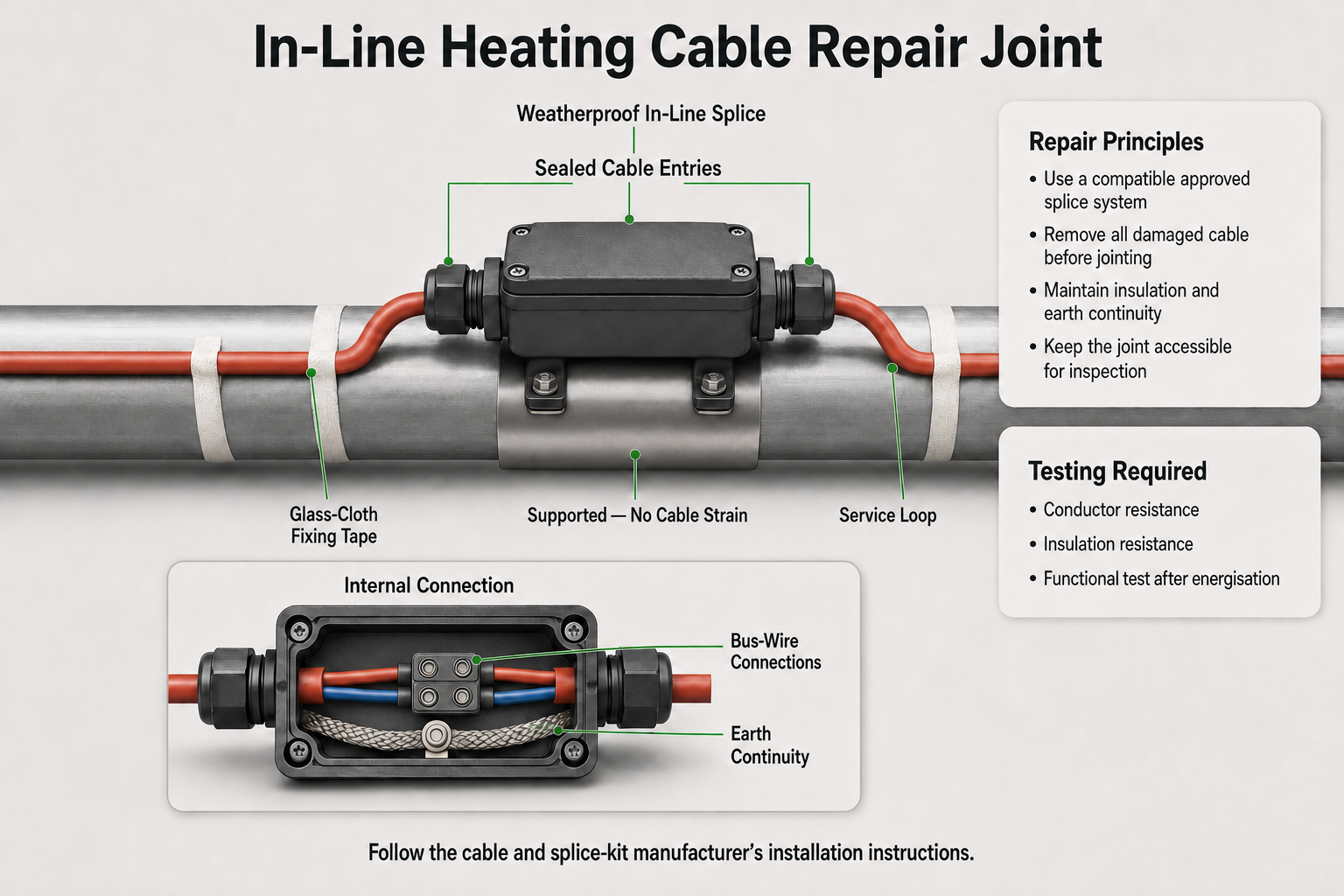
Test before and after reinstatement
Record electrical results before repair where safe and useful, then test the repaired circuit before insulation and again after insulation and cladding are reinstated. Functional testing should confirm controls and expected operation. Update drawings and the circuit history so future engineers know a joint exists.
When replacement is the better decision
Replacement may be preferable when damage is widespread, the cable is aged or unidentified, approved accessories are unavailable, multiple joints would be needed, the circuit no longer meets the duty, or access to future joints would be unacceptable. Whole-life reliability and compliance matter more than the smallest immediate repair.
Key takeaway
Trace heating cable can sometimes be repaired, but only as a complete engineered repair. Confirm the product, cause, location, approved accessories and post-repair test requirements before deciding.
Frequently asked questions
Can self-regulating cable be joined? Many product families have approved splice kits, but the exact accessory and installation instructions must match the cable and environment.
Can a damaged section simply be cut out? Only if an approved design and jointing method preserves circuit length, electrical ratings, heat output and approvals.
Should repaired cable be retested after insulation? Yes. Testing after reinstatement helps identify damage caused during lagging and confirms the final installed condition.
The recommended next step is a site survey. TA Thermal can review the asset, existing information, controls, insulation and electrical condition before defining the work required. Call 0115 683 9540 or email info@tathermal.co.uk.